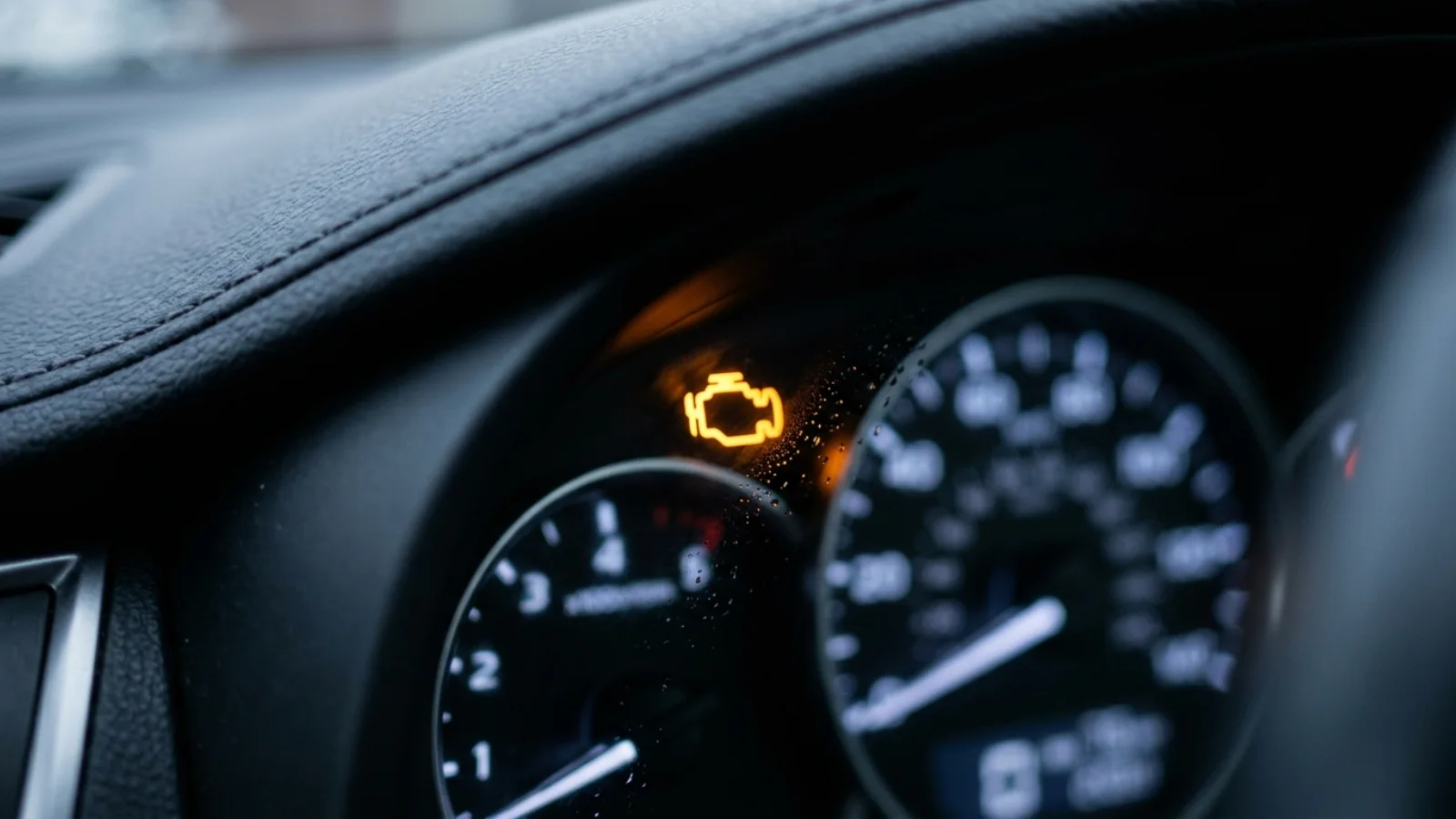
Few dashboard warnings generate as much guesswork as this one. A small amber outline of an engine appears, the car drives exactly as it did a minute ago, and you are left deciding between “pull over immediately” and “deal with it next month.”
Both reactions are usually wrong. A check engine light on the dash means the engine control module detected a value outside its expected range and stored a diagnostic trouble code. That code could represent a loose gas cap or a failing catalytic converter, and the light looks identical either way. What it never means is that the problem will resolve itself.
At Kansai Auto Repair in Long Branch, NJ, engine diagnostics is where most repairs begin — and where a lot of unnecessary parts replacement gets avoided.
Keep reading!
- What the difference is between a steady and a flashing check engine light
- The most common causes, from a loose gas cap to a failing catalytic converter
- Why a code is a starting point for diagnosis, not a parts list
- Why clearing the code without repair causes more problems than it solves
- What a professional diagnostic process actually involves
A check engine light on the dash is information — the value comes from interpreting it correctly.


Steady vs. Flashing: The Only Distinction That Changes What You Do
This is the single most useful thing to know about the light.
A steady check engine light means a fault has been recorded. The vehicle is generally safe to drive in the short term, but it should be scanned soon. Emissions performance may be degraded, fuel economy may drop, and the underlying fault may be getting worse.
A flashing check engine light means an active misfire severe enough to damage the catalytic converter. Raw fuel is passing into the exhaust, where it burns inside the converter and can destroy it in a matter of minutes — a repair that runs into four figures. Reduce speed, avoid heavy throttle, and get the vehicle to a shop.
Related lights carry their own meaning. A red oil pressure or temperature light means stop immediately. An amber ABS or traction control light means a safety system is offline. A separate steering warning light on electric power steering vehicles means assist may be reduced — a symptom covered in our guide to a steering wheel that is hard to turn.
The Most Common Reasons a Check Engine Light Comes On
Thousands of trouble codes exist, but a small number of faults account for most illuminated lights on the road today.
A Loose or Failed Gas Cap
Genuinely the most common cause, and the cheapest. The evaporative emissions system pressure-tests the fuel tank, and a cap that is loose, cracked, or has a hardened seal registers as a leak. Tighten it, and the light typically clears after several drive cycles. If it returns, the EVAP system has a real leak that needs smoke testing.
Oxygen Sensor Faults
O2 sensors measure exhaust oxygen so the computer can control the fuel mixture. They degrade with age and mileage. A failing sensor hurts fuel economy noticeably and, left alone, can cause a mixture problem that damages the catalytic converter. Worth noting: an O2 sensor code often reports a problem rather than being the problem — a vacuum leak or fuel delivery fault can set the same code.
Ignition System and Misfires
Worn spark plugs, failing coil packs, or bad plug wires cause misfires, which set cylinder-specific codes. Symptoms include rough idle, hesitation, and reduced power. A misfire severe enough to flash the light is urgent for the reason above.
Mass Airflow and Intake Faults
The MAF sensor measures incoming air so the computer can meter fuel correctly. Contamination, a dirty air filter, or a vacuum leak downstream all throw the calculation off, producing lean or rich condition codes and often a rough idle.
Catalytic Converter Efficiency
A converter that no longer processes exhaust effectively sets an efficiency code. Converters rarely fail on their own — they usually fail because something else was left unrepaired, typically long-running misfires, oil consumption, or a rich mixture. Replacing the converter without fixing the root cause guarantees a repeat.
EGR, Variable Valve Timing, and Oil-Related Faults
VVT actuators are hydraulically operated and depend on clean oil at the right pressure. Neglected oil changes cause sludge that blocks the small passages these systems rely on, setting timing performance codes. It is one of the more direct ways that skipping service turns into a dashboard warning — see how often to change your oil for the intervals that actually apply to local driving.
Transmission and Emissions Module Codes
The check engine light also reports faults from other modules. Codes for solenoid performance, gear ratio error, or torque converter clutch circuit are transmission-related — if shifting has also changed, review the signs of transmission problems. A/C pressure and clutch circuit faults can appear here too, which is why a scan is part of diagnosing a car A/C that is not blowing cold air.
Why a Code Is Not a Diagnosis
This is where a lot of money gets wasted, and it is worth being blunt about.
A free code read at a parts counter gives you something like P0171 — System Too Lean, Bank 1. That is not an instruction to replace a part. It is a statement that the computer had to add more fuel than expected to reach the correct mixture. The actual cause could be a vacuum leak, a dirty MAF sensor, a weak fuel pump, a clogged filter, a leaking injector, an exhaust leak ahead of the sensor, or a failing O2 sensor.
Seven possible causes, one code. Replacing the sensor because its name appears in the code description is a guess, and it fails more often than it works.
Real diagnosis narrows it down with evidence: live sensor data compared against expected values, freeze frame data showing the exact conditions when the fault occurred, fuel trim analysis to see how the computer is compensating, smoke testing for vacuum and EVAP leaks, pressure and electrical testing of the suspected components, and manufacturer-specific data that generic scanners cannot access.
That process costs time. It costs less than replacing three parts to find the right one.
What Not to Do With a Check Engine Light
A few common responses make things worse.
Do not simply clear the code. Disconnecting the battery or clearing with a scanner turns the light off without repairing anything. It also erases freeze frame data — the most useful diagnostic information available — and resets the emissions monitors, which means the vehicle will fail a New Jersey inspection until enough drive cycles complete.
Do not ignore a flashing light. The converter damage happens fast.
Do not assume it will pass inspection. New Jersey emissions testing reads the OBD-II system directly. An illuminated check engine light is an automatic failure, and so is a vehicle with incomplete readiness monitors after a recent code clear.
Do not replace parts based on a code description alone. It is the most expensive way to guess.
Get the Light Read Properly and Fix It Once
A check engine light on your dash is the vehicle telling you something specific. Whether that something is a two-dollar gas cap seal or a failing sensor, the way to find out is a real diagnosis — live data, freeze frame, and testing — rather than a parts-counter guess.
Kansai Auto Repair provides advanced engine diagnostics in Long Branch, NJ, with over 14 years of experience and a simple principle: identify the real problem before recommending repairs. Call +1 848-303-4220 to have your check engine light diagnosed properly.