Steering is the system drivers notice least until it changes. You do not think about how much effort it takes to turn into a parking spot — until one morning it takes noticeably more, or the wheel binds partway through the turn, or it feels fine at speed and heavy at a crawl.
A steering wheel hard to turn is never a cosmetic complaint. Steering is a primary safety system, and increased effort means something in it is failing: fluid, a pump, a belt, an electric motor, a rack, or the suspension components that carry the front end. Some causes are inexpensive. A few can leave you without assist entirely.
At Kansai Auto Repair in Long Branch, NJ, steering complaints often arrive alongside suspension wear, because the two systems share components and the same rough local pavement.
Keep reading!
- The most common reasons a steering wheel becomes hard to turn
- How hydraulic, electric, and electro-hydraulic steering fail differently
- Why the problem is sometimes tires or suspension rather than steering
- The warning signs that mean stop driving now
- What a steering inspection should cover
Understanding why a steering wheel is hard to turn tells you whether you are looking at a fluid top-up or a failing rack.

Three Kinds of Power Steering, Three Kinds of Failure
Before diagnosing anything, it helps to know which system your vehicle uses, because the failure modes barely overlap.
Hydraulic power steering (HPS) uses a belt-driven pump to pressurize fluid that assists the rack. Common on older vehicles and many trucks. It fails through low fluid, leaks, a worn pump, or a slipping belt, and it usually gets noisy before it gets heavy.
Electric power steering (EPS) uses an electric motor on the column or rack, controlled by a module. Standard on most vehicles built in the last decade. There is no fluid and no belt. It fails electrically — a torque sensor, the motor, the module, a connector, or low system voltage — and it often fails suddenly, with a warning light and a complete loss of assist.
Electro-hydraulic (EHPS) uses an electric motor to drive a hydraulic pump. It can fail either way.
If you are not sure which you have, a quick check works: if there is a power steering fluid reservoir under the hood, the system is hydraulic or electro-hydraulic. No reservoir means EPS.
Why Your Steering Wheel Is Hard to Turn
The list below runs from the simplest and cheapest causes to the ones that mean a major component is failing.
Low Power Steering Fluid
The most common cause on hydraulic systems, and always the result of a leak — these systems are sealed. Leaks develop at the rack seals, pressure hoses, and the pump shaft seal. Symptoms often include a whine that rises when you turn, and steering that is heaviest at low speed when the pump is turning slowly.
Topping the fluid off may restore assist temporarily, but the leak still needs to be found. Running a pump low on fluid destroys it.
A Failing Power Steering Pump
A worn pump cannot generate enough pressure. The tell is steering that feels heavy at idle or low RPM but lightens as engine speed rises, often with a groan or whine while turning. Fluid that is dark, foamy, or full of fine metal is confirming evidence.
A Worn or Loose Serpentine Belt
On hydraulic systems the pump is belt-driven. A glazed, cracked, or loose belt slips under the load of a full-lock turn, and assist drops exactly when you need it most. A squeal while turning the wheel at a standstill is the classic symptom. This is one of the least expensive items on the list and it is worth checking first — belt condition is routinely inspected during a proper oil service.
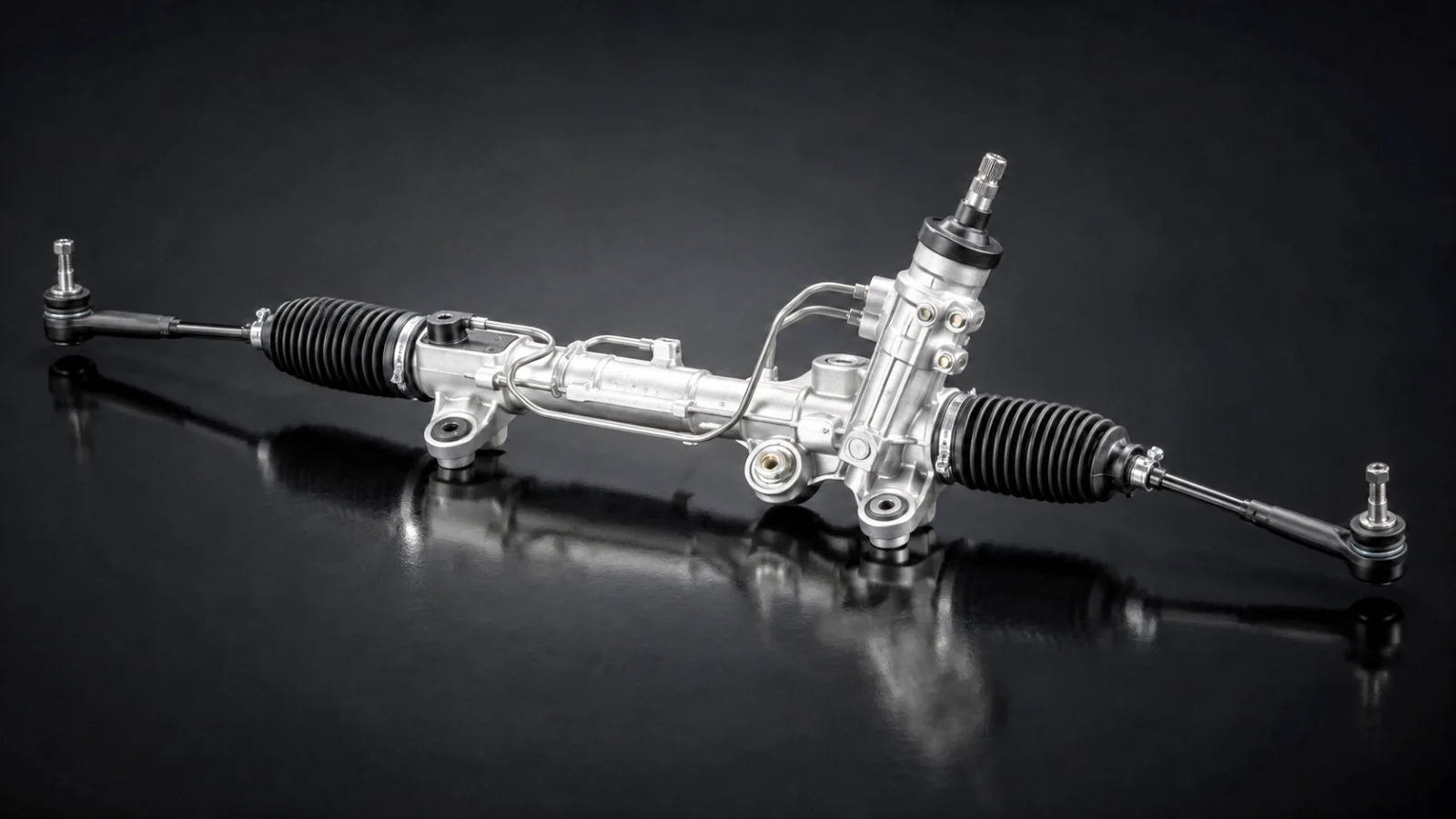
A Failing Steering Rack
The rack and pinion assembly can develop internal wear or seal failure. Symptoms include effort that varies through the turn, binding at a particular point, tightness that improves as the vehicle warms up, and fluid leaking near the inner tie rod boots. A rack that binds only when cold is a strong indicator of internal seal wear.
Electric Power Steering Faults
On EPS vehicles, heavy steering is usually accompanied by a steering warning light. Causes include torque sensor faults, motor failure, module problems, corroded connectors, and — surprisingly often — low battery voltage or a failing alternator, since EPS draws significant current. A weak charging system can cause intermittent loss of assist that seems random.
Worn Suspension and Steering Linkage
Ball joints, tie rod ends, and control arm bushings all affect steering effort. A seized ball joint or dry tie rod end adds real mechanical resistance, and worn bushings make the wheel feel vague rather than heavy. These parts usually announce themselves with clunks over bumps first — the same symptoms covered in our guide to bad shocks and struts symptoms.
Tires and Alignment
The simplest cause of all, and the most overlooked. Underinflated tires increase the contact patch and dramatically increase steering effort at low speed. Check pressures before assuming anything is broken. Poor alignment, mismatched tires, or a dragging brake caliper can also make the vehicle feel like it fights the wheel — if the car also pulls under braking, review the signs you need brake repair.
What Coastal and Winter Driving Does to Steering Components
Long Branch conditions accelerate several of these failures.
Salt corrodes. Road salt and coastal air attack tie rod threads, ball joint boots, rack boots, and steel power steering lines. A corroded pressure line can develop a pinhole and lose fluid quickly.
Cold thickens fluid. Hydraulic systems are noticeably heavier on a cold morning, and a system that is already marginal will feel much worse in January. Steering that is heavy for the first few minutes and then normalizes points toward fluid condition or rack seal wear.
Potholes stress the linkage. Freeze-thaw damage to local pavement puts sharp impact loads through tie rods, the rack mounts, and the steering knuckle. Alignment goes out, and worn parts get worse faster.
Warning Signs That Mean Stop Driving
Most steering complaints allow you to schedule a repair. These do not:
- Complete loss of power assist while driving — the vehicle is still steerable but requires very high effort, especially at low speed
- A steering warning light that appears while in motion
- Grinding or metallic noise while turning
- Free play — the wheel moves noticeably before the tires respond
- The wheel binding or catching at a point in the turn
- A large, sudden power steering fluid leak
Any of these should be inspected before further driving. Steering is not a system where you get a second warning.
What a Steering Inspection Should Cover
A proper diagnosis identifies whether the fault is hydraulic, electric, or mechanical before any part is replaced:
- Fluid level and condition on hydraulic systems, with a leak inspection at rack, hoses, and pump
- Belt condition and tension
- Pump pressure tested against specification
- Diagnostic scan for EPS and chassis module fault codes
- Battery and charging system tested on EPS vehicles
- Tie rod ends, ball joints, and rack bushings checked for play on a lift
- Tire pressure, condition, and alignment angles measured
- Steering effort compared left versus right, and cold versus warm
That last comparison is often what separates a rack problem from a pump problem in a few minutes.
Don't Wait Out a Steering Problem
If your steering wheel is hard to turn, the cause could be as simple as tire pressure or as significant as a failing rack — and the only way to know is a proper inspection. Early diagnosis usually means a repair rather than a replacement, and it removes the risk of losing assist somewhere inconvenient.
Kansai Auto Repair offers expert steering inspection and repair in Long Branch, NJ, with over 14 years of experience and clear explanations before any work begins. Call +1 848-303-4220 to have your steering checked.