
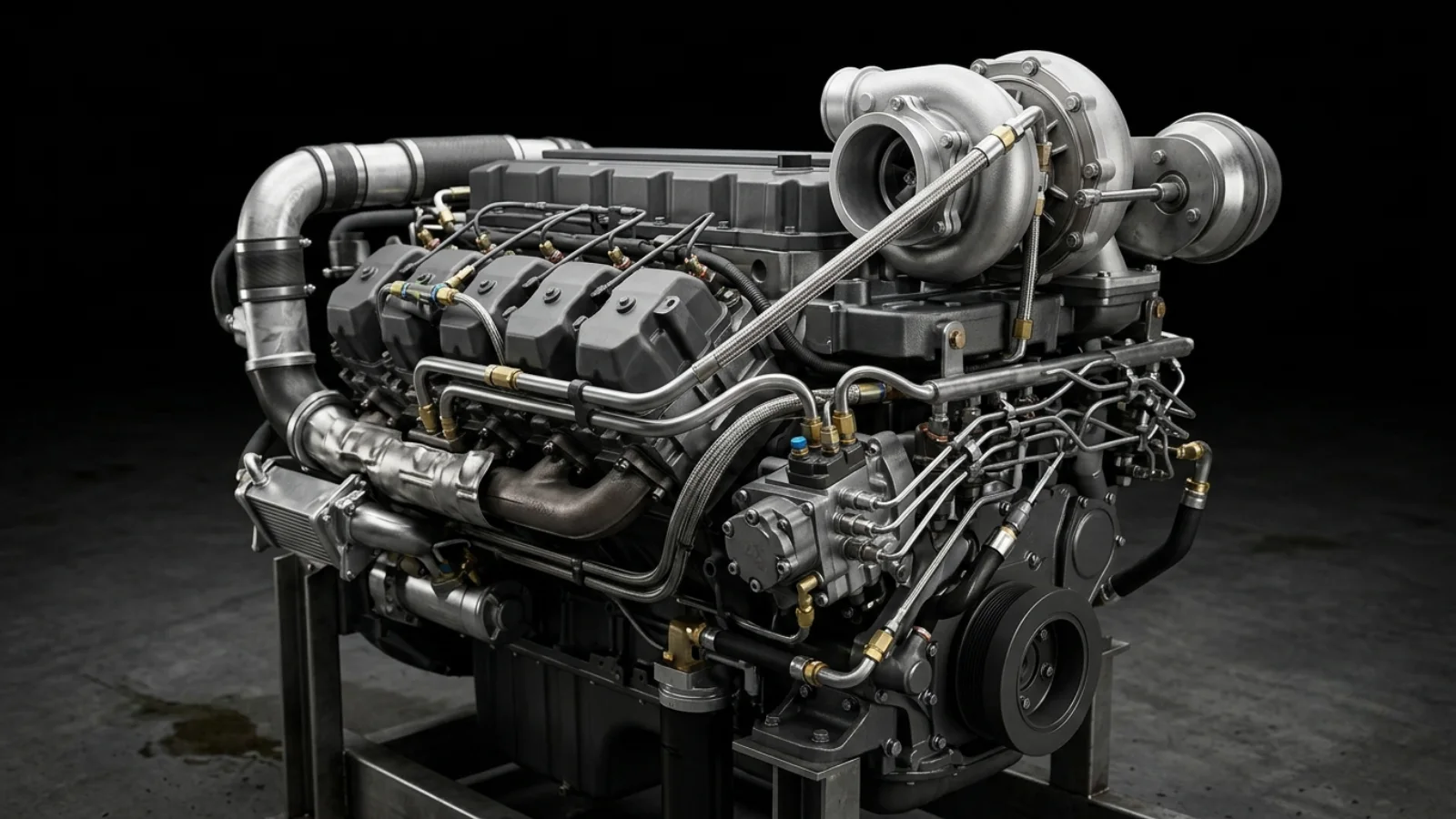
Diesel engines have a reputation for lasting forever, and it is earned — but it comes with a condition attached. A diesel outlives a gas engine because it is built stronger and runs at lower RPM, not because it needs less attention. In practice it needs *more*, and the systems that fail are expensive when neglected.
A realistic diesel truck maintenance schedule is what separates the trucks that pass 300,000 miles from the ones that need a five-figure repair at 120,000. Fuel systems, emissions components, and turbochargers on a modern diesel are all unforgiving of skipped service and poor fuel quality.
At Kansai Auto Repair in Long Branch, NJ, we service diesel pickups and work vehicles that run all over Monmouth County — contractors, delivery routes, and trucks that tow. The maintenance pattern that keeps them reliable is consistent.
Keep reading!
- Service intervals for oil, fuel filters, coolant, and transmission on a diesel
- Why fuel filter changes matter more on a diesel than any other filter
- How the DPF, EGR, and DEF systems fail — and what makes them fail sooner
- What short-trip driving does to a modern diesel
- The warning signs that mean stop driving and get it diagnosed
A disciplined diesel truck maintenance schedule is far cheaper than any single major repair on these engines.


Why Diesel Maintenance Is Different
Three characteristics drive the whole schedule.
Compression ignition. A diesel has no spark plugs; it ignites fuel through heat generated by compression ratios of roughly 15:1 to 20:1. That produces enormous cylinder pressures, which is why the block, crank, and bearings are heavier — and why oil quality matters so much.
High-pressure fuel injection. Modern common-rail systems operate at 25,000 to 35,000 psi with injector clearances measured in microns. Diesel fuel is also the lubricant for the injection pump. Water or debris in the fuel does not cause a rough idle; it causes component failure that can run into thousands of dollars.
Emissions aftertreatment. A modern diesel carries a diesel particulate filter (DPF), an EGR system, and usually selective catalytic reduction using diesel exhaust fluid (DEF). These systems need heat and sustained running to work correctly, and they are the single most common source of expensive diesel repairs today.
The Core Diesel Truck Maintenance Schedule
Always defer to your manufacturer’s manual — duty cycle changes everything. These are typical working intervals.
Engine Oil and Filter — 5,000 to 10,000 Miles
Diesel oil carries a heavier soot load and needs a specific rating (such as API CK-4 or FA-4, per the manufacturer). Do not substitute gasoline-engine oil. Trucks that tow, idle for long periods, or run short trips should stay near the low end of the range. The general logic behind interval choices is the same one we cover for how often to change your oil on gas engines — diesels simply have less margin.
Fuel Filters — 10,000 to 15,000 Miles
This is the most important filter on the truck. Most diesels use a primary filter with a water separator plus a secondary fine filter. Water in diesel fuel corrodes injection components and destroys the lubricating film the pump depends on. Drain the water separator regularly, not just at filter changes.
Air Filter — Inspect at Every Oil Change
Diesels move a lot of air. A restricted filter raises exhaust gas temperature, hurts fuel economy, and makes the turbo work harder. Replace based on condition and the restriction gauge, not a fixed mileage.
Coolant — 30,000 Miles for Testing, Longer for Replacement
Diesel coolant needs correct supplemental coolant additive (SCA) or nitrite levels. Without them, cylinder liner cavitation can pit through the liner wall. Test strips are inexpensive; a liner replacement is not.
Transmission Fluid — 30,000 to 60,000 Miles
Trucks that tow heat their transmission fluid hard, and heat is what kills automatic transmissions. If shifting has changed at all, do not wait for the interval — read the signs of transmission problems and get it checked.
Glow Plugs, Belts, and Hoses — Inspect Annually
Hard cold starts in a New Jersey winter usually trace back to glow plugs or the glow plug controller. Belts and hoses on a diesel live in a high-heat environment and should be inspected yearly regardless of appearance.
The Emissions Systems That Cause the Most Trouble
Almost every expensive modern diesel repair we see traces back to one of these three.
Diesel Particulate Filter (DPF)
The DPF traps soot and then burns it off in a process called regeneration, which requires sustained exhaust temperature. Regeneration happens passively at highway speed or actively when the ECU injects extra fuel to raise temperature.
The failure mode is predictable: a truck that only makes short trips never completes a regeneration cycle. Soot accumulates, the filter clogs, the engine derates, and eventually the DPF needs forced regeneration or replacement. If your driving is mostly local, a periodic sustained highway run is genuine maintenance, not a suggestion.
EGR System
Exhaust gas recirculation lowers combustion temperature to reduce NOx, but it routes soot-laden exhaust back through the intake. Over time the EGR valve sticks and the cooler clogs or cracks. Symptoms include rough idle, lost power, white smoke, and coolant loss with no visible external leak.
DEF and SCR System
Diesel exhaust fluid is a urea solution injected into the exhaust to convert NOx. DEF has a shelf life of roughly one year and degrades faster in heat. Contaminated or expired DEF causes injector and sensor faults, and most trucks will limit speed severely if the SCR system reports a fault. Never put DEF anywhere near the fuel tank — the two fillers are deliberately different sizes for good reason.
Warning Signs That Mean Stop and Diagnose
Some diesel symptoms are worth finishing the drive on. These are not:
- White smoke — unburned fuel or coolant entering the combustion chamber
- Blue smoke — oil burning, often turbo seals or worn rings
- Excessive black smoke — over-fueling, restricted air, or injector faults
- Hard starting or extended cranking — glow plugs, low fuel pressure, or air in the fuel system
- Sudden loss of power or a derate message — usually emissions-related and worsening
- Coolant loss with no visible leak — possibly EGR cooler or head gasket
Any of these should be scanned properly. Diesel diagnostics read manufacturer-specific data — rail pressure, injector balance rates, DPF soot load, EGR position — that a generic code reader cannot access. The same principle applies here as with any dash warning: see what a check engine light really means before assuming it can wait.
Keep Your Diesel on Schedule and It Will Keep Working
The trucks that reach very high mileage are not lucky. They get the right oil at the right interval, clean fuel through fresh filters, coolant that is tested rather than assumed, and enough sustained running for the emissions system to do its job.
Kansai Auto Repair provides diesel diagnostics, maintenance, and repair in Long Branch, NJ, backed by over 14 years of experience and honest recommendations. Call +1 848-303-4220 to build a diesel truck maintenance schedule around how your vehicle is actually used.