
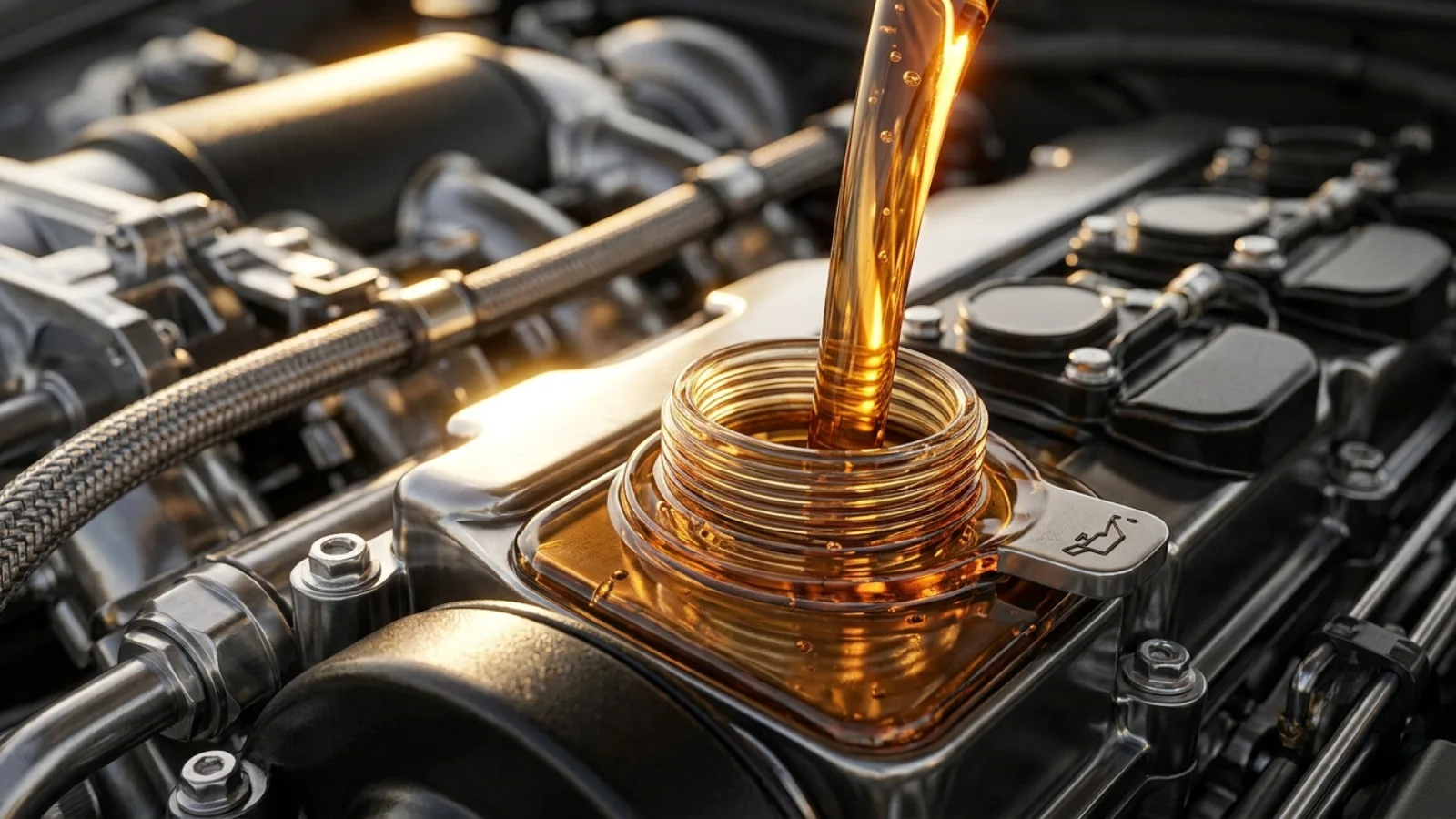
The 3,000-mile oil change is one of the most persistent pieces of advice in car ownership, and for most modern vehicles it is simply outdated. Engines, oils, and filters have all changed. The interval that protected a carbureted V8 in 1985 has very little to do with a turbocharged four-cylinder built in the last decade.
That leaves a fair question: how often to change your oil on the car sitting in your driveway right now? The honest answer is that the number depends on the oil, the engine, and — more than anything — how you drive. A car that runs short trips around Long Branch in January is living a harder life than one that covers highway miles in June, even if the odometer says otherwise.
At Kansai Auto Repair in Long Branch, NJ, oil service is the most routine thing we do and also the one where the most engine damage gets caught early.
Keep reading!
- Realistic oil change intervals for conventional, synthetic blend, and full synthetic oil
- Why “severe service” describes far more drivers than people assume
- What actually happens inside an engine when oil is left too long
- Whether oil life monitors can be trusted
- What should be checked at every oil service besides the oil itself
Getting the answer right on how often to change your oil is the cheapest engine protection available.


What Engine Oil Is Actually Doing
Lubrication is only part of the job. Engine oil also carries heat away from pistons and bearings, holds contaminants in suspension so the filter can trap them, neutralizes acids created by combustion, and seals the tiny gap between piston ring and cylinder wall.
Oil does not really “wear out” in the sense of disappearing. What degrades is the additive package — detergents, dispersants, anti-wear compounds, and viscosity modifiers that are consumed as they do their work. Once those additives are depleted, the base oil is still slippery but no longer protecting.
That is why a dipstick reading is a poor guide. Oil can look acceptable and be chemically finished, and it can look dark and still be perfectly serviceable — dark oil often just means the detergents are doing exactly what they should.
How Often to Change Your Oil, by Oil Type
These are working ranges, not guarantees. Your owner’s manual and your driving conditions override any general figure.
Conventional Oil
Roughly 3,000 to 5,000 miles. Conventional oil is refined crude with an additive package, and its molecules vary in size and shape, which makes it break down faster under heat. It is still specified for some older and simpler engines.
Synthetic Blend
Roughly 5,000 to 7,500 miles. A blend mixes synthetic and conventional base stocks — better thermal stability than conventional at a lower cost than full synthetic.
Full Synthetic
Roughly 7,500 to 12,000 miles, and some manufacturers specify longer. Synthetic base oils are engineered to a uniform molecular structure, so they resist heat, shear, and oxidation far better. Most turbocharged and direct-injection engines require full synthetic, and using anything else can void warranty coverage.
High-Mileage Oil
Formulated for vehicles past roughly 75,000 miles, with seal conditioners and slightly heavier additive loading to address minor leaks and consumption. Intervals track the underlying oil type.
Why "Severe Service" Probably Describes Your Driving
Nearly every manufacturer publishes two schedules: normal and severe. Severe service typically includes frequent short trips under 10 miles, stop-and-go traffic, extended idling, extreme heat or cold, towing, and driving on dusty or salted roads.
Read that list against a typical Long Branch week and the pattern is obvious. School runs, errands on Broadway, summer beach traffic, and cold winter mornings where the engine never fully reaches operating temperature — that is the severe schedule, not the normal one.
Short trips are the most damaging pattern of all. Combustion produces water vapor, and until the oil gets hot enough to boil that moisture off, it stays in the crankcase, where it forms acids and sludge. A car that only ever runs 15 minutes at a time never gets the chance to clean itself up.
If you drive this way, take the shorter end of any interval range. It is the least expensive insurance in car ownership.
Can You Trust the Oil Life Monitor?
Modern vehicles use an algorithm — engine temperature, RPM, load, trip length, ambient conditions — rather than a simple mileage countdown. These systems are genuinely useful and generally conservative.
Two cautions apply. First, the monitor tracks oil condition, not oil level; an engine that consumes oil can run low well before the monitor asks for a change, so check the dipstick monthly regardless. Second, oil degrades with time as well as mileage. If you drive very little, change the oil at least once a year even if the monitor never asks.
What Happens When Oil Goes Too Long
Degraded oil thickens and oxidizes into sludge, which blocks narrow oil passages and starves the parts at the end of the line. The consequences show up in a predictable order:
- Accelerated bearing wear as the oil film thins under load
- Stuck piston rings, leading to oil consumption and lost compression
- Turbocharger failure — turbo bearings run extremely hot and are the first casualty of dirty oil
- Variable valve timing faults, since VVT actuators are hydraulically operated and sensitive to contamination
- Overheating, because oil is carrying a meaningful share of the engine’s heat load
Many of these announce themselves through the dash first. A stored code for VVT performance or low oil pressure is a common reason drivers come in asking about a check engine light, and oil neglect is often what the scan reveals.
Engine oil is also not the only fluid on a schedule. Transmission fluid degrades the same way and gets ignored far more often — worth reading if you have noticed any signs of transmission problems. Diesel engines are stricter still, with their own intervals and oil specifications covered in our diesel truck maintenance schedule.
What a Proper Oil Service Should Include
An oil change is the most frequent time a technician has your car on a lift, which makes it the best opportunity for early detection. A complete service should cover:
- Correct oil grade and specification for your engine, not just “5W-30”
- A new filter every time, of appropriate quality
- Drain plug gasket replaced or inspected
- Fluid level check on coolant, brake fluid, power steering, and washer fluid
- Tire pressure and tread depth, including the spare where accessible
- Visual inspection for leaks, damaged belts, worn suspension components, and brake condition
- Reset of the oil life monitor
The inspection is where the real value sits. A seeping valve cover gasket, a cracked serpentine belt, or a brake pad down to its last few millimeters are all easier and cheaper to deal with when they are found early.
Keep the Interval That Matches How You Actually Drive
The right answer to how often to change your oil is not a single number — it is the shorter of what your manufacturer specifies and what your driving conditions demand. For most drivers in Long Branch, that means treating the severe service schedule as the default.
Kansai Auto Repair has served Monmouth County for over 14 years with quality parts, correct-specification oil, and a genuine inspection at every service. Call +1 848-303-4220 to schedule an oil change and we will set an interval that fits your engine and your driving, not a generic sticker.