Of all the systems on a vehicle, the transmission has the widest gap between the cost of maintaining it and the cost of replacing it. A fluid and filter service is routine work. A rebuild or replacement is one of the largest bills in car ownership — often several thousand dollars.
What makes that gap frustrating is how much warning transmissions usually give. The signs of transmission problems tend to show up months before a failure: a shift that arrives a beat late, a shudder at a specific speed, a spot on the driveway. Drivers get used to them, and the small repair window closes.
At Kansai Auto Repair in Long Branch, NJ, we see this pattern constantly, and the difference between a fluid service and a rebuild is very often just how early the vehicle came in.
Keep reading!
- The eight symptoms that indicate a transmission needs attention
- Why heat is the number one killer of automatic transmissions
- How to check transmission fluid and what its color and smell tell you
- Whether a high-mileage transmission should be serviced or left alone
- What driving conditions in Monmouth County do to transmission life
Catching the signs of transmission problems early is the only reliable way to avoid the largest repair on the list.


What a Transmission Is Doing and Why It Runs Hot
An engine only makes useful power across a fairly narrow RPM band. The transmission’s job is to keep it there while the vehicle moves anywhere from a crawl to highway speed.
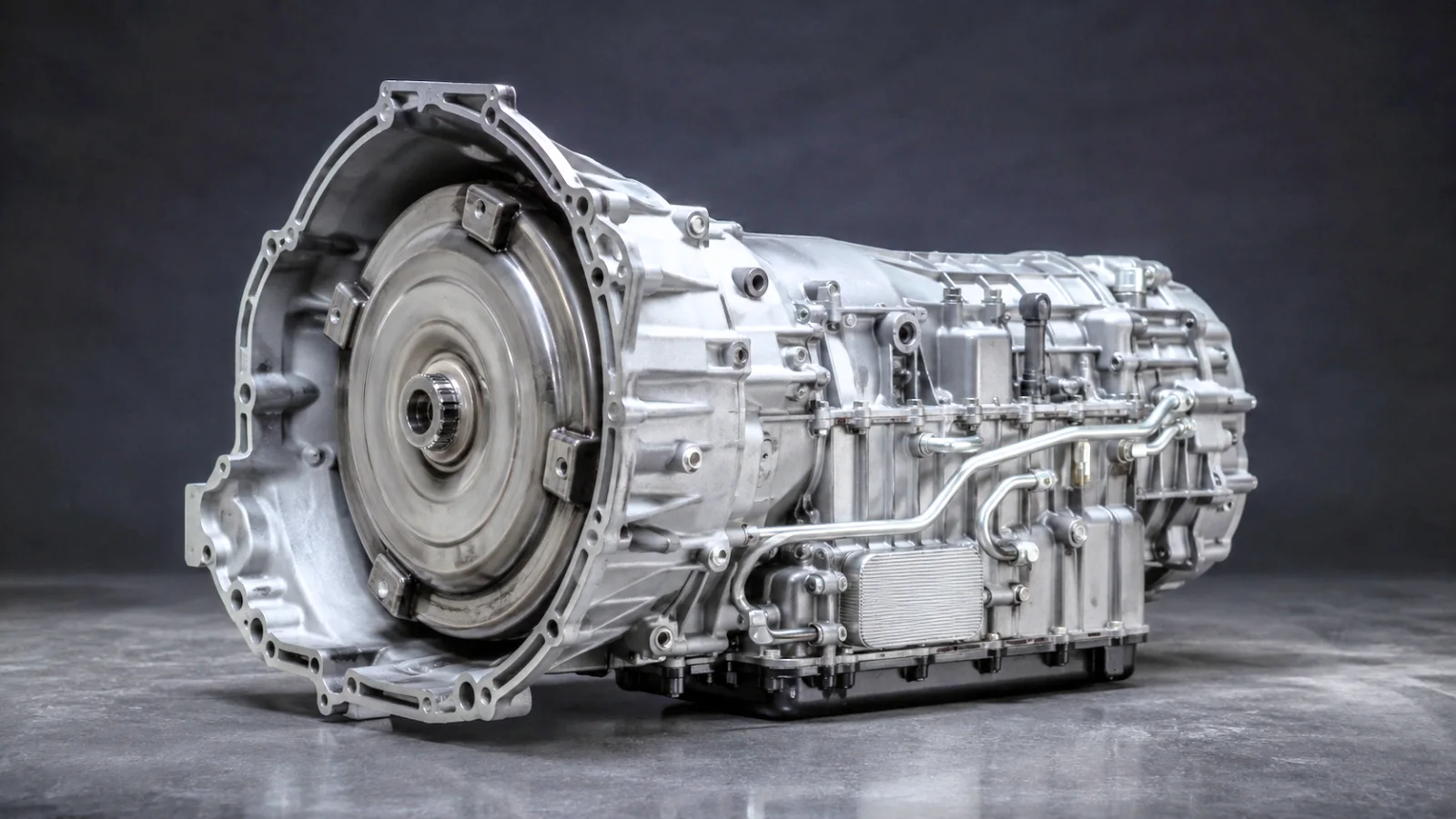
An automatic does this with a torque converter that couples the engine hydraulically, planetary gearsets that provide the ratios, clutch packs and bands that engage those gears, and a valve body — a hydraulic control center — directing pressurized fluid to the right places at the right moment. A CVT does the same job with a belt or chain running between variable-diameter pulleys, and a dual-clutch unit uses two clutches to preselect the next gear.
The common thread is fluid. Transmission fluid is simultaneously the hydraulic medium, the lubricant, the coolant, and part of the friction material. That is why fluid condition is not a minor maintenance item — it is the transmission’s operating environment.
And that environment gets hot. Heat is the single biggest destroyer of automatic transmissions. Fluid that runs consistently hot oxidizes, loses its friction characteristics, and varnishes the narrow passages inside the valve body. As a general rule of thumb in the trade, every 20°F increase above normal operating temperature roughly halves fluid life.
8 Signs of Transmission Problems
These symptoms rarely arrive all at once. Most transmissions show one or two of them long before anything dramatic happens.
Delayed or Hesitant Engagement
You shift into Drive or Reverse and there is a pause — sometimes a second or two — before the vehicle actually moves. This usually indicates low fluid pressure, worn clutch packs, or valve body wear. It is one of the earliest and most reliable warnings, and it is very easy to normalize.
Slipping Gears
The engine revs but the vehicle does not accelerate in proportion, or the transmission drops out of gear on its own. Slipping means the clutches are no longer holding, and it tends to get worse quickly once it starts.
Hard, Harsh, or Erratic Shifts
Shifts that clunk, jerk, or arrive at strange times point to fluid condition, solenoid faults, or control module issues. Modern transmissions adapt their shift strategy over time, so an abrupt change in shift feel is meaningful information.
Shuddering, Especially at Steady Speed
A vibration that feels like driving over rumble strips, often between 30 and 50 mph under light throttle, is commonly torque converter lockup shudder. Degraded fluid is a frequent cause and, caught early, a fluid service sometimes resolves it entirely.
Whining, Humming, or Grinding
Noise that changes with vehicle speed rather than engine speed points to bearings, planetary gears, or a failing pump. A whine that rises with road speed deserves prompt attention, because internal debris circulates and damages everything downstream.
Burning Smell
A sharp, acrid smell means the fluid is overheating. Once fluid burns, the friction material it carries is compromised and it will not recover. This one is not something to monitor for a few weeks.
Red or Brown Fluid on the Driveway
Transmission fluid is typically red when new and darkens with age. Any leak lowers the fluid level, and low fluid means low pressure, which means slipping and heat — a loop that accelerates. Common leak points are the pan gasket, cooler lines, and axle seals.
Check Engine Light With Transmission Codes
Modern transmissions are electronically controlled and report faults through the same system as the engine. Codes for solenoid performance, gear ratio error, or torque converter clutch circuit are transmission-specific. If a warning light is on, get the codes read before assuming it is unrelated — see what a check engine light really means.
How to Check Transmission Fluid — and What It Tells You
If your vehicle has a transmission dipstick, checking it takes two minutes. Many newer vehicles are sealed with no dipstick, requiring a check at a specific fluid temperature from underneath — a shop job.
Where a dipstick exists, the typical procedure is to warm the vehicle to operating temperature, park on level ground with the engine running, cycle through the gears, return to Park, then pull and read the dipstick. Always confirm the procedure in your owner’s manual, since some manufacturers specify checking in Neutral or with the engine off.
What you are reading:
- Bright red and translucent — healthy
- Darker red or light brown — aged but generally serviceable
- Dark brown or opaque — overdue for service
- Black, or smells burnt — heat damage has already occurred
- Milky or pink — coolant intrusion, usually a failed radiator transmission cooler, and a serious problem
- Visible metal particles — internal wear
Fluid condition is the closest thing to a transmission health report that a driver can read without tools.
Should a High-Mileage Transmission Be Serviced?
There is a persistent belief that changing fluid in a neglected high-mileage transmission causes it to fail. What actually happens is more mundane: a transmission that is already failing tends to fail soon regardless, and the service simply coincides with it.
The reasonable position is this. A transmission serviced on schedule should keep being serviced on schedule. A transmission with 150,000 miles on original fluid that already slips is a different conversation — worth a fluid inspection and an honest assessment before deciding.
What is not in doubt is prevention. Most manufacturers specify service somewhere between 30,000 and 60,000 miles under severe conditions, and severe conditions include towing, stop-and-go traffic, and heavy loads. It is the same reasoning we apply to engine oil intervals: the published “normal” schedule rarely matches how people actually drive. For trucks, the intervals are tighter still — covered in our diesel truck maintenance schedule.
What Local Driving Does to Transmission Life
Monmouth County driving is harder on transmissions than the mileage suggests.
Stop-and-go traffic keeps the torque converter unlocked, and an unlocked converter generates significant heat. Summer beach traffic on Ocean Avenue and Route 36 is close to a worst case.
Towing and hauling raise fluid temperature dramatically. Any vehicle used for towing should be on the severe service schedule without exception, and an auxiliary cooler is worth considering.
Short trips in winter are the opposite problem: fluid never reaches full operating temperature, so moisture and contaminants stay in the system.
Cooling matters as much as fluid. Many vehicles route transmission fluid through a cooler inside the radiator, which means an engine cooling problem becomes a transmission problem — and vice versa when a failed cooler lets coolant into the fluid.
Get It Looked At While It Is Still a Fluid Service
Nearly every expensive transmission repair started as a symptom someone decided to keep an eye on. A delayed engagement, a shudder at 40 mph, a small red spot on the driveway — those are the moments when the fix is still affordable.
Kansai Auto Repair provides transmission diagnostics and fluid service in Long Branch, NJ, backed by over 14 years of experience and honest recommendations about what your vehicle actually needs. Call +1 848-303-4220 if you have noticed any of these signs of transmission problems.