A worn suspension almost never announces itself. It degrades over tens of thousands of miles, and because the change is gradual, most drivers only realize how bad it had gotten after the repair is done and the car suddenly feels planted again.
That slow decline is why bad shocks and struts symptoms are worth learning to recognize deliberately. Shocks and struts do not just make the ride comfortable — they keep the tires in contact with the road. When they stop doing that well, braking distance grows, cornering gets vague, and tires wear out early.
At Kansai Auto Repair in Long Branch, NJ, suspension work is one of the most common jobs we see, and the reason is local: potholes, patched winter pavement, and coastal salt are hard on struts, springs, and bushings.
Keep reading!
- The seven symptoms that point to worn shocks and struts
- Why bad suspension makes your brakes and tires work harder
- The difference between a shock, a strut, and the parts around them
- How road conditions in Monmouth County shorten suspension life
- What a suspension inspection should actually check
Learning the bad shocks and struts symptoms early keeps a comfort complaint from turning into a safety problem.


What Shocks and Struts Actually Do
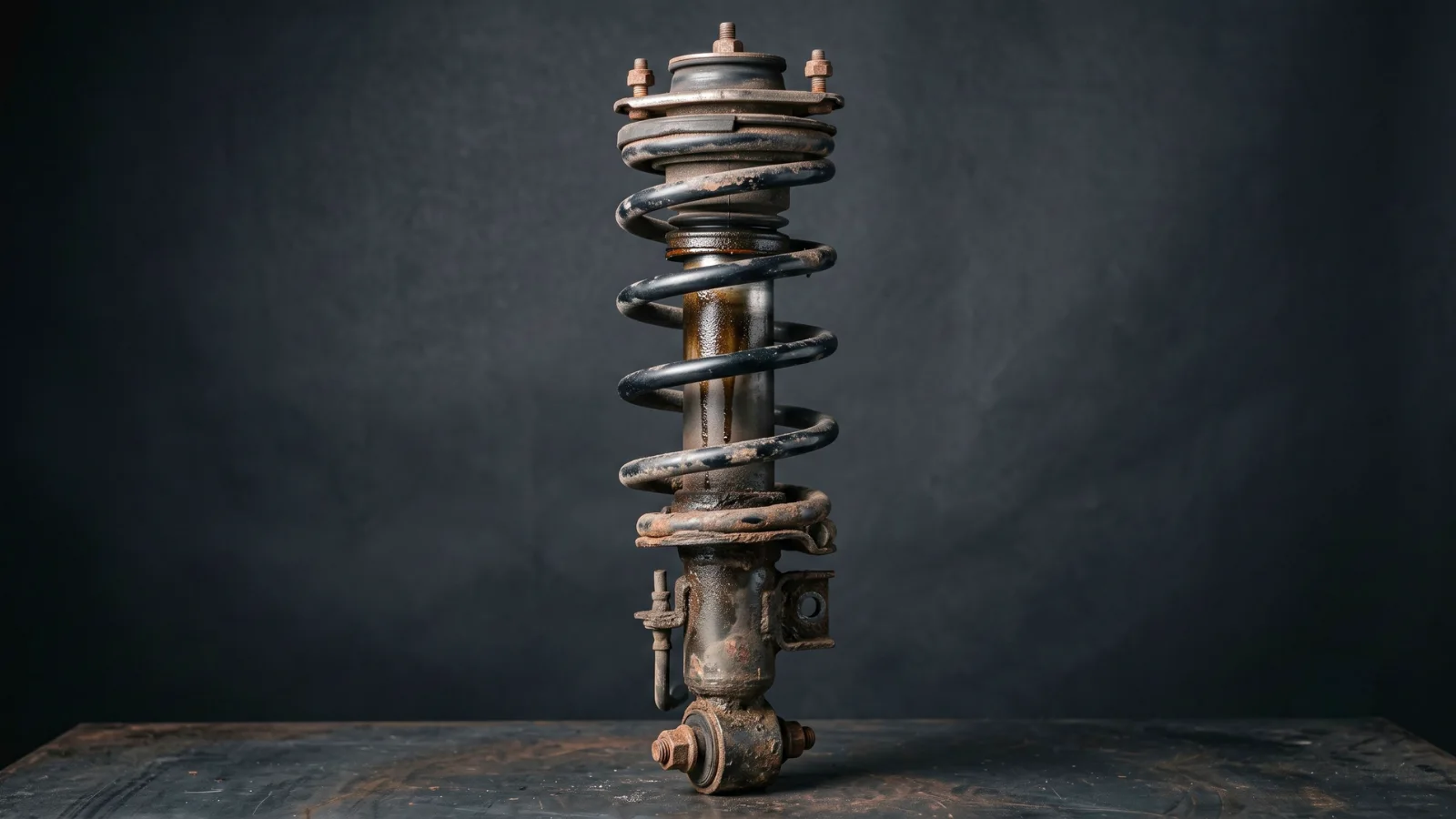
Springs carry the weight of the car. Shocks and struts control the springs — they damp the bouncing that a spring would otherwise keep doing after every bump. Without that damping, a wheel that hits a pothole keeps oscillating, and every fraction of a second the tire spends off the pavement is a fraction of a second with no grip.
A strut is a structural part: it combines the damper with the spring seat and forms part of the steering geometry. A shock is a damper only, mounted separately from the spring. Replacing struts almost always changes alignment; replacing shocks usually does not. That distinction matters when you are budgeting a repair.
Around them sit the parts that quietly fail alongside them: control arm bushings, ball joints, sway bar links, strut mounts, and bearings. Very often the noise a driver blames on “the shocks” is actually a five-dollar sway bar link.
7 Bad Shocks and Struts Symptoms Worth Acting On
Some of these are comfort complaints. Others are structural. All of them are worth having measured rather than guessed at.
The Car Keeps Bouncing After a Bump
The classic test still works. Push down hard on one corner of the car and let go. A healthy damper lets the body rise once and settle. If it bounces two or three times, that damper is worn. On the road the same fault shows up as a floaty, boat-like feeling over dips.
Nose Dive When Braking, Squat When Accelerating
Worn dampers let weight transfer aggressively. The front end dips hard under braking and the rear sags under acceleration. This is not just uncomfortable — it unloads the rear tires exactly when you want them helping to stop the car. If braking already feels off, it is worth ruling out the signs you need brake repair at the same time, since the two complaints feel similar from the driver’s seat.
Cupped or Uneven Tire Wear
Cupping — scalloped dips spaced evenly around the tread — is the signature of a damper that is letting the tire skip along the pavement. Feathering and inside-edge wear point more toward alignment or worn bushings. Either way, tires are an expensive way to find out your suspension needs work.
Clunks and Rattles Over Bumps
A single sharp clunk over a small bump usually comes from sway bar links or strut mounts. A deeper knock from one corner tends to be a ball joint or control arm bushing. Persistent noise over rough pavement should be diagnosed, not tolerated — some of the parts that make that noise are load-bearing.
Oil or Wetness on the Shock Body
A damper works by forcing oil through valves. A visible film of oil running down the shock body means the seal has failed and the damping is going with it. This one is easy to spot on a lift and is usually cause for replacement in pairs.
The Steering Feels Vague or Wanders
Worn strut mounts, bushings, and ball joints introduce play into the steering geometry. The car needs constant small corrections to hold a lane, and the wheel feels disconnected from the front tires. If the wheel also feels heavy or notchy, the cause may be in the steering system itself rather than the suspension — see why your steering wheel is hard to turn.
Excessive Body Roll in Corners
Leaning heavily on highway ramps or in quick lane changes points to worn dampers, tired springs, or a broken sway bar link. Body roll is not just a comfort issue; it changes how quickly the car responds when you have to swerve.
How Long Should Shocks and Struts Last in New Jersey?
Manufacturers often suggest inspection around 50,000 miles and replacement somewhere between 60,000 and 100,000 miles. In practice, road quality decides.
Monmouth County pavement goes through a full freeze-thaw cycle every winter, which is what creates potholes: water gets into a crack, freezes, expands, and breaks the surface apart. Add salt-driven corrosion on strut housings and mounting hardware, plus the extra load of beach traffic in summer, and it is common to see struts that are done well before 80,000 miles.
Vehicles that carry heavy loads or tow wear dampers faster still. So do cars that spend their lives on patched secondary roads rather than smooth highway.
Why Worn Suspension Costs You More Than Comfort
Three costs follow worn dampers, and only one of them is obvious.
Braking distance. Tests have repeatedly shown that worn shocks measurably lengthen stopping distance, because a bouncing tire spends part of its time only lightly loaded. Your brakes may be perfect and the car will still take longer to stop.
Tires. Cupping ruins a tire well before its tread depth is used up. Replacing a set of tires costs far more than replacing the dampers that destroyed them.
Everything connected to it. A failed strut transfers shock loads into mounts, bearings, bushings, and the steering rack. What starts as a damper replacement becomes a much larger front-end job if it is left long enough.
Fluid and filter service is easy to keep on schedule; suspension is easy to forget. If you are already tracking maintenance intervals, it helps to fold a suspension check into the same routine you use for oil change intervals.
What a Real Suspension Inspection Covers
A useful inspection is done on a lift with the wheels unloaded, and it should include:
- Dampers checked for leaks, physical damage, and worn bushings
- Springs inspected for corrosion and breakage, especially near the lower coil
- Ball joints and tie rod ends checked for play
- Control arm and sway bar bushings inspected for cracking and separation
- Strut mounts and bearings checked for binding and noise while turning
- Tire wear patterns read as evidence of what the suspension is doing
- Alignment angles measured, since worn parts almost always throw them off
The tire wear pattern is the part drivers underestimate. Tread tells you what the suspension has been doing for the last 20,000 miles, and it does not lie.
Get Your Suspension Checked Before Your Tires Pay for It
If you recognize these bad shocks and struts symptoms — bouncing, clunking, nose dive, cupped tires, vague steering — the fix is usually smaller than people expect, especially when it is caught before the tires and mounts are damaged.
Kansai Auto Repair has served Long Branch, NJ and Monmouth County for over 14 years with accurate diagnostics and honest recommendations. Call +1 848-303-4220 and we will inspect your suspension, show you exactly what is worn, and tell you what genuinely needs to be replaced.